vendredi 12 novembre 2010

Kevin Brownlow Interview (Part II)

Swedish poster of the 1926 Michel Strogoff
Part 2
French Silents

I wanted to discuss this forgotten era of French cinema with Kevin Brownlow as I knew he felt passionately about it. He also talked about the influence of French directors on American film in the teens, particularly that of Maurice Tourneur. He also tells us how he discovered Gance's Napoléon.
Vous pouvez lire la traduction française et écoutez des extraits sonores ici.

You are particularly fond of French silents. How did you discover them?
What happened was that I was looking for old films and I got as far as Paddington. I was in Praed Street and a photographic shop had a print of a film called Fishers of the Isle. I had no idea what it was. It was about 12 shillings and sixpence and I brought it home. And it was the most exquisite picture: Pêcheur d’Islande (1924) by Jacques de Baroncelli and I showed it to my mother. She was completely smitten with French culture; in fact at one time, she nearly married a Frenchman. She loved it and said: “It’s the most beautiful film you’ve got!” And, it was shot in Brittany. It starred Charles Vanel and Sandra Milowanoff and I thought it was superb. I still think it’s superb. I cannot understand why it’s buried in the CNC because they’ve got a beautiful print right off the camera negative. The only thing wrong with it, because they were short of money, the storm sequence is done rather badly and you see a model yacht floating in a bath, you know that sort of effect. But otherwise, it’s flawless, beautiful. So that made me look for more French silents and particularly those provincial silents shot on locations like La Terre for instance. I found those absolutely marvellous. I couldn’t find enough and that was why I made one myself. It’s absolutely ludicrous to have made a French film in Hampstead (laugh) because the whole point of these was their authenticity, the fact that they were shot on locations…however that was why I made Les Prisonniers as it eventually was called. But one French film I did get after a while was called The Lion of the Mogols (Le Lion des Mogols, 1924, J. Epstein). And it was dreadful. It was so bad I couldn’t bear having it around so I rang up the library I got it from in Bromley and said could I exchange it? That was 2 reels, no it was 1 reel I think, and they said that all they had was a film called Napoleon Bonaparte and The French Révolution. I thought this is going to be a classroom film with static engravings and long text titles. I said I’ve got to get rid of The Lion of the Mogols so I’ll go for it. And I’ll send this one back. And when the Napoléon film arrived I was at home with flu from school. And I got the projector up and got my parents into the front room. And it was the cinema as I always thought it ought to be: tremendously ambitious, spectacular, innovative, the camera doing things I’ve never seen it do before and my mother then said: “That’s the most beautiful film you’ve got!” (laugh) and I discovered that it was part of a 6 reel release. Then I put advertisements in the magazine the Exchange & Mart and said I wanted Napoléon and I did get eventually the whole thing as it was released on 9.5 mm and people came round to see it. I remember David Robinson, who is now the director of the Pordenone Silent Film Festival, being brought by Liam O’Leary from the BFI. He came to see it in the 50s. And it lasted 6 reels, around one hour and a half. And that led to something funny. I was doing school certificate and we had a history exam. The question in the history exam was ‘describe the fall of Napoléon’. Well, the film didn’t deal with the fall of Napoléon, nor did any of my history lessons. And so I said: “It is impossible to understand the fall of Napoléon without knowing about the rise” and then I told the entire story of the film. (laugh) which must have startled the examiner. It probably entertained him but he failed me (laugh) having not answered the question.

Maurice Tourneur is one of your favourite directors. Which of his films impressed you particularly ?
The film that hooked me to Maurice Tourneur I had never seen. I read a programme note by William K. Everson and it was so beautifully written, it was so atmospheric, it talked about the film called Lorna Doone (1922) And I fell in love with that picture just from the programme note. Then I bought it, looked at it and was terribly disappointed. Terribly disappointed! And it was because it was a rotten dupe that had been made by some collector. And when I saw an original print with tints and tones and everything, it shot up in my estimation. But it still isn’t the film that it should be. It is an extraordinarily beautiful one. And the next thing that happened was very amusing. I had found a collection in the North, in the Lake District. And I examined the title frame of one of them and it said The Wishing Ring, an Idyll of Old England (1914). So I put it back because I thought it was a British silent film and I knew it would be disappointing. Then I told a friend who was doing a catalogue of English films about this and he looked it up, came back and said: “That’s not English, that’s American by Maurice Tourneur”. So I was most embarrassed. Luckily, the man hadn’t sold it. And I bought it for a pound a reel. And it turned out to be the most enchanting comedy, absolutely enchanting made as early as 1914. It was exquisite. So I was falling back in love with Maurice Tourneur again. And I began to see things like Trilby. But the one that really knocked me out was called Alias Jimmy Valentine made in 1915 and it obviously had a great impact on Fritz Lang because the opening of Die Spinnen (1919-20) has a sequence of a raid on an office shot exactly like Tourneur did above an open-plan office so you can see the routes of the criminals, and I saw in other Fritz Lang films reproduction of Tourneur scenes. Fascinating! Anyway…When I went to America, I met Tourneur’s art director Ben Carré, a Frenchman who had done films at Gaumont like La course aux potirons (The Pumpkin Race, 1907) he made all the pumpkins for them, he was the scenic designer and became Tourneur’s art director. And, then I started seeing things like The Blue Bird (1918). Some of the later ones were surprisingly bland and I realised that he had been a victim of exhibitor’s demanding the usual trash and he got so bored with fighting them that he gave in, and gave them what they wanted. That’s a bit disappointing. He never really delivered the masterpiece that he ought to have done. He made so many pictures that have disappeared. But he trained a young man called Clarence Brown and Clarence Brown–he had been an automobile engineer before he joined Tourneur- He had never been in the picture business at all. But he admired Tourneur films so much that he went out and sought him out and virtually demanded the job. He has the spirit in his silent films; he has everything of Tourneur plus good solid dramatic structure. I wanted to do a documentary about that school, that strange school of this Frenchman who arrived in America and creates an even better director than he was. At least, in that period.
I think it’s underrated – the French influence on American cinema. Maurice Tourneur was just one director who was sent out to make picture of a higher standard than the American could do. Really to teach the Americans how to do it. But there was a cameraman Lucien Andriot, there was the art director Ben Carré, another director Emile Chautard, it’s a fascinating group who was brought out by Jules Brulatour who was the man who had the franchise for Eastman Kodak. Every time a handle was turned on a silent film camera, he made about a dollar! (laugh) So he was unbelievably wealthy. But he did us a favour by hiring those marvellous people like Albert Capellani! The only one I was really disappointed in was Louis Gasnier, his pictures are just so trashy! But that French group were tremendously important I think in bringing high standards to American pictures.
When I was in Hollywood, I managed to interview a lot of the people who worked for Tourneur: Charles Van Enger, the cameraman, Ben Carré, Jacques Tourneur, his son. I came to Paris and met Louise Lagrange with whom he lived the last 30 years of his life. I had shown The Wishing Ring at the NFT in 1960 and sent a rave letter to Tourneur just before he died. So I wrote a book about him using all this material. I never published it because I met Jacques Deslandes and he said he was writing a book about Maurice Tourneur. And when he showed me the documents that he had found, I admitted defeat immediately. He even had his exercise books from the Lycée Condorcet. Unbelievable! Scripts and contracts and letters…he disappeared! Nothing was heard from Jacques Deslandes. The documents disappeared. Fade out-Fade in. Many years later, two men from France came to see me at my office. They said they were writing a book about Maurice Tourneur. And they had the most amazing documents. They didn’t have the exercise books but they had the equivalent, really astonishing things! They disappeared too! (laugh) The documents have disappeared. I just don’t know what’s going on. So I appeal to anyone who is reading this and who has a lead on what happened to these precious documents. Somebody should do a book on Maurice Tourneur!

What is the main difference for you between French and American silents? Is it the cinematography, the narrative or the use of locations?

Well, recently I did a series of shows in Ireland and I showed them the best films I could think of in their categories; one was The Eagle (1926) which is a delightful light-hearted romantic picture with Valentino and Vilma Banky directed by Clarence Brown; Stella Dallas (1925) which is one the most emotional film you can ever hope to see directed by Henry King and then I showed Visages d’Enfants (Faces of Children, 1923-25). And that’s the one that got the audience. I was really surprised but I’ve always thought it was a great picture. And it is due to the fact there is an integrity about those films. Not that there isn’t about the American ones but there is a commercial imperative to an awful lot of American pictures which the French don’t bother with. And the best French films have a tremendous enthusiasm, integrity, love of cinema, beauty and that essential reality brought about by the use of locations. There is no compromise in the best of them which tends to be in American pictures. But there are also an awful lot of bad French films as you know! Nobody sets out to make a bad picture but money has an awful lot to do with it. The Americans used to do a terrible thing called the Poverty Row programme pictures, in which they would get a star for one day, they only had paid it for a day, take all the close-ups they could think of then sprinkle them throughout the picture…pathetic actually! There is no production value, no dramatic value, nothing…And they used to crank them faster in order to fill the 6 reels quicker. They are so cynical and there are too many of those, they’re just unbearable. They all survived because nobody ever wanted them back! Now the French didn’t do that. But they were forced to make pictures with very low budgets. And you just can’t expect quality when you’ve just no time and no money to make the picture with.
The French have a reputation for the Avant-Garde and you keep seeing films like The Seashell and the Clergyman (la coquille et le clergyman, 1928, Germaine Dulac). But the great thing about French cinema is when the Avant-Garde is in the mainstream: i.e. Napoléon, L’argent, Michel Strogoff. Thrilling!

Which French directors did you actually meet in person?
I met Raymond Bernard, Marco de Gastyne, Marcel L’Herbier, René Clair, Jean Renoir, Rose Pansini who worked with Georges Monca, terrible director, unfortunately I did meet her. That’s all I can remember. But Raymond Bernard I went to see because of the Chess Player (Le Joueur d’Echecs, 1927) which I had only on 9.5 mm at that time. Marco de Gastyne because of La merveilleuse vie de Jeanne d’Arc (1928) which I had also on 9.5 mm, this is a tremendous spectacle. It’s my interest in epics again! And Alberto Cavalcanti. I think that’s about it, plus Abel Gance.
In 1966, I went over to represent It Happened Here, paid for by UA, and I was given a publicity fellow called Bernard Eisenschitz. We both became great friends which we still are and he was fascinated by silent film history too and he took me around these old directors. I spent several days at UA expenses going round. One of them that we met was Viatcheslav Tourjansky who made Michel Strogoff. Now, Tourjansky happened to in Berlin in September 1939 and he worked for the Nazis. He was called Victor Tourjansky. And when I knocked on his door, it took him a full 5 minutes opening locks one after the other, before we could get in! And that’s obviously because he suspected the Resistance would track him down. (laugh) He was very cold; it was difficult to get him worked up about this. It was great shame but it was a fascinating experience to meet him. And he told me he’d gone to America because Michel Strogoff had been a great hit released by Universal. And funnily enough, he was hired by MGM to make The Cossacks (1928) and the cossacks came over with him. And there is a shot of them riding down the main street of Los Angeles. And then he was dropped from The Cossacks and George Hill took over and then Clarence Brown took over. And he ended up directing Tim McCoy’s westerns. So he decided to go back to France. But I hope I got it over to him what a wonderful film Michel Strogoff was. How much it had impressed me. That has an extraordinary sequence at the beginning where you see the rebellious Tartars in Siberia intercut with the dancers in the Winter Palace in St Petersburg. Absolutely superb editing, superb everything!

During the 20s, a company run by Russian émigrés, Albatros, was one of the main production companies in France. What do you think was their main contribution to French cinema?
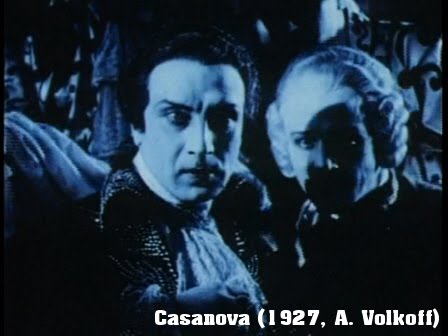
That’s an interesting question. I would say Un chapeau de paille d’Italie (1927, René Clair) and Les Nouveaux Messieurs (1929, Jacques Feyder) and those films made by Russian emigres. I deeply regret that I could have gone to see Alexandre Kamenka [the head of the Albatros Studios] and didn’t. Liam O’Leary kept telling me about him, but I didn’t. But my interest in Russia started by seeing films like Michel Strogoff [It’s a Ciné France Film production.]
La Maison du Mystère (1922, A. Volkoff) I saw the whole of that, day after day at Pordenone, 10 episodes of it. Absolutely superb, le Brasier Ardent (1923, I. Mosjoukine). Oh and Mosjoukine! That’s their greatest contribution to the world. Mosjoukine is an absolutely unforgettable actor. Napoléon if it hadn’t been for Gance and Dieudonné, It was practically a Russian film. Actually nearly all the people who worked on it were Russians which is ironic when you consider what Napoléon was trying to do to Russia! (laugh) And I finally saw the original version of Le Lion des Mogols, it wasn’t nearly as bad as I thought it was in 9.5 mm 1 reel cut-down. I wonder if Souris d’hôtel (1927), the film has been preserved. I’ve always been fascinated by that, it’s directed by a fellow from Chile, Adelqui Millar who appears in British pictures a lot. It’s the most curious film, I hope they bring that out on DVD. But I bet they won’t.

Jacques de Baroncelli is forgotten name in France apart for a few talking pictures. Which of his silent films do you like particularly?

The two that I absolutely worship are Pêcheur d’Islande (1924) and Nêne (1923). I wasn’t particularly interested in La femme et le pantin (1929) which seems to have been made again and again, in America, here and in France. But Pêcheur d’Islande is particularly outstanding, heartbreaking picture and Nêne (1923) had that same quality. Mind you, Sandra Milowanoff again the Albatros actress from Russia, gives a great deal to these pictures and to Fescourt’s Les Misérables (1925). She is absolutely fabulous in that. That’s another magnificent film. I sat through all 7 hours of that in one sitting. Terrific! (laugh)

You restored The Chess Player by Raymond Bernard with its original score by Henri Rabaud conducted by Carl Davis. How did you discover it?


I was hoping you were going to ask me about the restoration of that film because it’s such an extraordinary story. I bought Le Joueur d’Echecs on 9.5 mm in two reels. I think got a 4 reels version for the French which some reasons are completely different versions on 9.5 in France as they did in England. That completely satisfied my desire to make epics. To see this cavalery charge across my bedroom wall was thrilling. And funnily enough, it had an impact on Tony Richardson’s The Charge of the Light Brigade (1968) which I’ll tell about you later on. Lenny Borger worked for Variety and he rang me up and told me he was coming to London and I would like to see some French silents. I put the projector up and I ran him a series of pictures including Le Joueur d’Echecs. And he said: “Where is the original 35mm of that?” I said: “It doesn’t exist as far as I know. This is all there is.” Well, he didn’t accept that and he went looking for the 35mm. And one freezing December, he rang me from East Berlin and he told me he’d found it. “It’s in the DDR Archive. It’s not just a print. It’s the original camera negative.” So a charming man who ran the archive said he was perfectly happy for us to do something with this. And when I worked for Thames Television, it became possible. Now, it was missing Reel 1 and that was a bit of a disaster. So I then found a Dutch collector who had another print and it had a reel 1, but then we looked at it and it had been ruined by water damage. The irony is, the reason was this Bernard was in the East Berlin archive was that Tristan Bernard was Jewish. Raymond Bernard, Tristan and his wife were arrested by the French police, handed over to the Germans and shipped out to a concentration camp. At which point I think the Vichy government thought this is going too far. It’s like taking Laurence Olivier and Vivien Leigh out to a concentration camp. So they said: “bring them back”. So they returned them dutifully. But they had also seized the films. And that’s how they got hold of Le Joueur d’Echecs. So we salute the Gestapo who did a very good job at preservation! (laugh) except that they lost reel one. Finally Fred Junck in Luxembourg came up with a pristine reel 1. So David Gill and I were able to propose it to Thames Television and to Jeremy Isaacs. And we got Carl Davis to write the music. He began writing the music and ironically, a TV programme was made about him writing the music for Le Joueur d’Echecs. He then came across the Henri Rabaud score and said: “This is so good. We’ve got to use this!” And he scrapped what he had written. My God! He was right the Rabaud score was absolutely terrific. Now comes the moment when we are going to show it: 1990 at the Dominion, Tottenham Court Road. It was in December, dreadful night; snow everywhere, motorway cut off, projectionist at the other end of the motorway. My God! How are we going to show the film tonight? We get in a projectionist from the NFT who doesn’t know how to operate Victoria-8s which is what they had in the Dominion. The film starts, there is an image on the screen but it’s so dim, it looks as if there is a candle in the lamp house. There is more light blazing off the orchestra’s music stands than there is on the screen. I am in agony. I am walking up and down the projection box looking down... My God! After 40 min, the door bursts open and in comes the projectionist, looks through the port and says: “Oh My God!” Goes “Swish! Click!” and it looks perfect. And for the rest of the film, it’s perfect. Everybody comes out, I meet my friends and I say: “I am so sorry about that disaster.” They say: “What disaster?” They hadn’t even noticed…
Before the film was shown it had to arrive from East Germany, it was sent to Thames Television. There wasn’t a name on it, just Thames Television and the dispatch department didn’t know what to do with it. It said The Chess Players. So they looked it up and sure enough it was distributed by Connoisseur, it was a film made by Satyajit Ray with Richard Attenborough and they send it off to Austria. They thought they had a German language version of The Chess Players. It took an awful lot of persuasion to send it back! (laugh)
For The Charge of the Light Brigade, Tony Richardson had shot the battle scenes in Turkey and he lined up a lot of cannons and fired them. And they just seemed to squirt smoke. Now in Le Joueur d’Echecs, when the cannons go off, they leap backwards as they do when you’ve got live cannon balls in them. So I showed it to Tony and I said: “The cannons have got to look like this otherwise if I cut the charge, it’s going to seem very limp.” By God, he got the cannon back on Chobham Common, he got hydraulic mechanical systems operated by an American who happened to have been the son of the man who worked on the original Ben Hur -very helpful!- and we reshot it all on Chobham Common. So thank you, Raymond Bernard! (laugh)
Which forgotten French silent should get a DVD release immediately in your opinion?

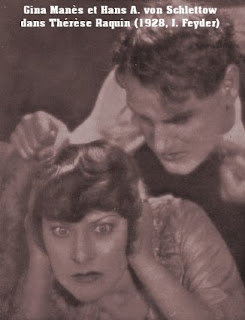
Apart from Pêcheur d’Islande, I would like Thérèse Raquin (1928, J. Feyder)! (laugh) [the film is lost]. Michel Strogoff (1926, Viatcheslav Tourjansky) would be a wonderful one to do. Casanova (1927, Alexandre Volkoff) would be also a great idea; La Maison du Mystère (1922) by Alexandre Volkoff too. Oh! and Napoléon! (laugh)

jeudi 11 novembre 2010

Kevin Brownlow Interview (Part I)

Part 1
Beginnings and directing pictures

I conducted this interview with Kevin Brownlow in September 2008 and it was originally published in French. I feel that the original text needed to be published as well now that he is receiving the recognition he deserves from the Academy of Motion Picture Arts and Sciences. In this original transcript, you will meet the film-maker who directed two fiction films. He speaks with his customary self-deprecating humour. Another four parts will be published in the following days.

Vous pouvez lire la traduction française et écouter des extraits sonores sur le site DVDClassik.

Which film sparked your interest in cinema for the first time?

The curious thing is I don’t think I can answer that. I have to go back to the beginning and I know that when I was sent to boarding school at the age of three, we were never shown films except by a charity called Dr Barnardo’s. And they used to come to the school to collect the money from the little boxes that were in our halls and as a thank you, they would show us the home movies that the teachers had taken at the orphanages for Dr Barnardo’s. And they were on 9.5 mm and even though I had never seen a film in my life, I knew these were terribly badly shot and I hated them. So when I was taken to the cinema for the first time, around 1941, it was Snow White and the Seven Dwarfs, but the first film that came on was a newsreel and I thought the quality was superb. I think that set my standards for what a film should look like. Although it also proved my technical lack of hability technically. I remember they were four naval officers walking towards the camera and I was waiting for them to fall into the cinema, fall off the screen, fall into the cinema…I was terribly disappointed when they disappeared at the side of the screen, I presumed they had gone into the wings. Anyhow I ran out screaming from Snow White. The wicked Queen was terrifying and this is the only time when I had to be persuaded back into the cinema. I remember my mother pursuing me in the grand hall of the Ritz theatre in Tunbridge Wells. She knelt down and persuaded me to come back in that it was just a film. That’s what they all say, isn’t it? So very very reluctantly I returned to Snow White. But I cannot remember what it was that put me in…that really turn me on to cinema. I don’t think I saw very much after that. I went to another boarding school and this was very different from the other one. It was a very unpleasant place like Colditz. And it was the winter of 1947 which was the worst winter of the century. It was so cold; it was unbelievable. But our parents were only allowed to visit every third week end, and the headmaster used to tempt us back from those meetings with a film show in the winter. And I remember it was in the chapel of the school with stone floor. I used to sit on that stone floor as close to the projector as I could get so there was already some attraction. And they were showing a version of Oliver Twist, a 1933 mute version of the film produced by Herbert Brenon with Dickie Moore. First of all I was fascinated by the fact that the benevolent old gentleman was called Mr Brownlow. Then I was fascinated by the fact that you could convert anything into a cinema just by blocking out the light and putting up a projector and a screen and that really fascinated me. And I remember the film jammed. A prefect was projecting and he did the unforgivable thing to pulling it through and he lost the loop and it broke. And some frames fell next to me. When the show was over, I picked these frames up and rushed to the dormitory which was completely black, picked up my torch from above my bed and stood in the middle of the room and switched on the torch in front of this piece of film expecting to see a theatre quality image on the wall…extremely disappointing! But I remember from that moment on, I wanted a projector. And I went on and on with my parents. I must have 10 and it was Christmas. I saw a package that looked very promising and I tore it open and sure enough it was projector. But there was something wrong with it. The film it showed at sprocket holes on either sides but it was quite large film. And I realised when I got it up to the bedroom to try it out that it was a still projector! I had forgotten to say movie or film… Anyway the following year I got –I had made my preference known- I got a film projector and once again being technically hopeless I couldn’t get the bulb in the right place and it looked awful…back to Dr Barnardo’s standards! Then I suddenly accidentally moved the bulb and it illumined the image properly and I suddenly saw it as it was meant to be seen and it looked great! And that was very exciting. I got two films: a Mickey Mouse and the one that really impressed me was the Naval Review at Spithead, 1935.

When did you when you started collecting films ?

After running those to death, I went out to the streets of London to look for more. And I didn’t know where to go. But I took a bus to Baker Street and found myself in George Street where there was a photographic shop and I asked if they had any 9.5 mm film and they did! A little pile of them came down from the shelf. They fell all over the floor I remember and the shop assistant had to go down on her knees to pick them up. They were at one pound and six shillings a reel and I happened to have the right amount of money to take them all. I got them home and started to show them to my parents. My mother got very excited because she said: ‘That’s Douglas Fairbanks!’ and I thought she making it up because even I had heard of Douglas Fairbanks. How could I have had suddenly a film with Douglas Fairbanks? And then the next one had William S. Hart, and the next one had Bessie Love! So I got really excited about this. The films were terrific. The Fairbanks one was missing the beginning. I had no idea what it was. But since he was so famous, I thought all I had to do was to go to the local library and there would be a book. I would take the book off the shelf and it would fall open at a picture of my film and tell me all about it. They were no media studies in those days, of course! I went to the library, I took the book and it fell open at a picture from my film and there was the description! It reveals it’s American Aristocracy (1916) and it gives all the details about it. Oh my God! If I have film which is in a book, I’ve got to find some more! This is what turned me on to being a collector. But that Douglas Fairbanks film fascinated me. Number 1: it had a beautiful photographic quality, even though it was 9.5 mm, it looked really good like that newsreel I had seen. Second of all: it was very fresh and bright and funny. Fairbanks’ personality came over…this had been reduced to three 60ft reel from 5 reels. And it had a hydroplane in it. Fascinating! Shot in 1916, it had the latest motorcar, but it looked so prehistoric isn’t the word…That was fascinating too! And later on I heard about the BFI, went along there and discovered they had a thing called the Index to the films of DW Griffith by Seymour Stern and Griffith was supposed to have produced this film which he had nothing to do with it. He was in the West and it was made in the East, but it had the cast. And I learned that cast by heart. And a few years later when I joined the film industry, I kept hearing people talking about a actor’s agency, called the Al Parker agency. And I knew, having a one-track mind, that this was the Albert S. Parker who had played the villain in American Aristocracy. So I rang him up. And I said: ‘Does the name Douglas Fairbanks mean anything to you?’ He said: ‘Douglas Fairbanks! Jesus Christ! I directed him!’ ‘Whom did you direct?’ ‘Fairbanks in The Black Pirate!’ I said: ‘I think I got your first film!’ He said: ‘Bring it over!’. So I took my projector and the film and I went to see the fellow who played the villain in this, it was uncanny. And we ran it on the wall and he got his wife in, I had to run it again. Then he got so interested that he organised a dinner. And he got James Mason, Trevor Howard, Clive Brook, Hardy Kruger, all these people….anyway, this is how it all started.

What did you want to become at that age: a film director, an editor or a film historian?
I wanted to go into the Navy! My father was a commercial artist connected to the film industry in this he did the lettering for film posters. You may think that’s all printed but it was actually hand drawn and really difficult work. And he warned me against the film industry. He knew enough about it and that I wouldn’t get on with it. So I kept away from it. But one thing I couldn’t stand was school and I was having to do A-Levels and after school, you go to university and all the rest of it and it just stretched forward the academic side into infinity. I knew I wouldn’t get into university, but at the same time I couldn’t see any alternative. But then, I had been making an amateur film and one of the actors in it had got a job as an office boy at a documentary film company. And he was told if he could get a replacement, he could go into the cutting room. So he said to me: ‘Look! How about taking over this job as office boy? You get £4.10d a week and you would be getting a foothold in the film industry.’ ‘I don’t think I want to be in the film industry!’ Then I thought, I’ve got another year to go at school. It would be great to get out of that. So I accepted and that’s what got me into the film industry.

Can you tell us how you made your first amateur picture?

I didn’t want to make films. But my mother had worried that I was going to turn into a film projectionist and so she bought a 9.5 mm film camera which she gave me, and she encourage me to go out and make a documentary about Hampstead and I didn’t want to do that. But, there’s the camera and I couldn’t very well not use it so I began to make this film. I couldn’t get the whole building in the view finder so I did these terrible camera movements, swishing from side to side, it’s called ‘hosepiping’ in amateur film-making. And when I saw that, there was clearly something wrong with the camera, not the cameraman, the camera! But I showed it to a friend who was a cameraman and he told me: ‘Don’t move the camera!’. And when I did the next roll by not moving the camera the difference was outstanding, really astonishing. Then I began to get ambition, I didn’t want to make this documentary, I wanted to make great films, epic films. And so one the things we did in French was the translation of a Maupassant story called Les Prisonniers and that was all about the German occupation during the Franco-Prussian war. I thought maybe if I updated it, I could make this into a film. That’s what started that. But I used to actually get ill after each session. It was so frustrating. You couldn’t see the results as you can with video, you didn’t know what you were getting. Everything went wrong. It was really tough going. I didn’t have a taste for it. I would have been perfectly happy if I had been allowed to show films. It would have ideal if somebody had given me a film theatre. I would have been an ideal art house film exhibitor. But the feeling was that I ought to be creative and I ought to make films. So that’s how that starts…
I think I was about 14 when I started making The Capture and it took me three years to finish it. It’s very short too. It took that long because I had to save up the money to get the film and so on. Then that was finished and that did get a certain amount of coverage in amateur film circles. What it did for me more than anything else, it brought into contact with a man called Derek Hill who was the assistant editor of Amateur Cine World and he came to see me to find out about this film. And then I told him about my silent films. So he said: ‘Why don’t you write articles for amateur cineworld?’. He had a word with the editor and these articles were commissioned. I couldn’t write…Poor Derek had to write my articles for me at the beginning. He taught me how to write. That was the most valuable thing about that film. In 1954, my first articles were published in Amateur Cine World and I became a writer because of that.

How old were you when you started making It Happened Here?

How old was I when I started making It Happened Here? When I got the idea, it must have been shortly after I joined the film indusdry as an office boy. I was 17 then and all I had to do was carry cans from the laboratory to the office and back again. It was quite pleasant walking through sunlit London in August 1955. I must have been 17. And I remember walking up Charlotte Street and a black Citroën screetched to a halt beside me and a man jumped out and ran into the delicatessen shop and shouted back at his driver in German. Then I thought –oh my God!- what might have happened if…then I thought, that would be a good subject for a film. I didn’t think, don’t be an idiot, you’re only earning £4.10d a week and you’re an office boy…you’re not likely to be able to…That’s what everybody told me! My mother said: ‘How are you going to do the Nazi rally on Trafalgar Square?’ So well, I thought, by doing it! The adolescent has no imagination and that’s why they are very useful to join the Army and kill people. I just went ahead and did it! And it was terrible, just as awful as you would imagine. And then I did it again and it was slightly better. And I remember the so-called art director and I were having coffee. He drew on a napkin what it could have been and it looked so fabulous that I said, all right, we’ll scrap everything and we’ll go back and do it again like that. And we did. And in that square that day, it must have been a press photographer who didn’t reveal himself but he took a series of absolutely terrific pictures which he sold to Continental magazines. Suddenly I was famous. I was in French magazines, German magazines, Swiss magazines, blown up like this, you know, unbelievable! And yet I don’t remember him being there or even talking to me or anything. Then The Daily Express wanted to get hold of me and other English newspapers. So I realised I couldn’t give it up. What I had planned to do was shoot enough to impress a producer and then he would take over. I would become the second Orson Welles. That’s what I wanted to be. I wanted to make a film greater than Citizen Kane, be the second Orson Welles and have it all paid for by Paramount or MGM or something…

Did you realise what a vast undertaking it would become when you started it, especially without any budget?


Well, I knew it was a vast undertaking and that interested me. I wanted to make epics. What I couldn’t stand about amateur films is that they were all so tiny and so unambitious. I thought if you were going to make a film outside the industry, there is no reason it shouldn’t look as good as one that’s made within the industry, I mean…how I thought I would pay for it, I did not know but that’s the feeling I had. If we are doing a crowd scene, let’s have a crowd. So I took advantage of such things as –there was a Battle of Britain exhibition in which they brought out German aircraft all over Whitehall. Horseguard’s Parade was full of Messerschmitts, Heinkels, Dorniers and I wrote the sequence around that with the characters in my film. But the trouble was I had no script and no story, I didn’t know what I was doing. I was playing around: adolescent exhibitionism, that’s what it was! And my actors were leaving me and I kept reshooting. It was awful! And I went down -we needed more uniforms- I went down to Portobello Road because I heard they were selling German uniforms. I found a stall that sold helmets. I was buying these helmets and I said to this chap: ‘Do you know any collectors? That’s what I really want.’ He said: ‘There is one!’ And there was a boy standing next to me, extremely youthful [Andrew Mollo was 16], dressed in a Victorian outfit, he seemed to have made for himself. And I talked to him. I decided to reveal a secret I had been told, I said: ‘Did you know that in Kensington there is a Russian family that has got a lot of Third Reich material?’ He said: ‘Yes, I think that’s us.’ I said: ‘Oh!’ He took me home. I was very worried because I thought number 1, he was going to be a Nazi nad when I went into his room it was painted red, white and black, the German colors. It had a bust of Hitler on a table and there were German helmets and uniforms and everything all over the place. It was astonishing! So well I thought, even if he is a closet Nazi, let’s use, let’s get the stuff out of him and use it in the film. Well, he was perfectly willing to come on to the film but he wanted to see what I had shot. So I patronizingly took him home and switched the stuff on. He is going to be knocked down by this. And in the end, he was terribly disappointed. He said: ‘Everything in that is incorrect!’ I said: ‘EXCUSE ME! What’s incorrect about it???’ (laugh) he told me, he went through one thing at a time; every single thing was wrong… And at first I didn’t know what he was talking about, but I realised that he did know his stuff. And if I was going to work with him I’d better follow his advice. And we did a session in which everything was correct and the difference was night and day. So I had to throw everything away again… Except that I could bring myself to throw away the Trafalgar Square rally and that’s still in the film. We started from scratch in 1957. And he earned nothing, he was an art student. I earned by now £6.10 a week. So we had to save up for a roll of film and one Sunday morning, got into Trafalgar Sq or nearby to shoot it. It last two and a half minutes. It didn’t take long to shoot it and that was it. Then we had to wait another 3 months. It was ridiculous! Anyway this is how the film started.

Why did you select such a burning subject as the German occupation of Great-Britain?
Well, first of all, I was born into the war and I didn’t think there was anything else for the first 6 and 7 years of my life, I thought this was normal life. You know…V1 came over and were attacked by Spitfires, you picked up the shrapnel and you watched the flak. It was all frighfully entertaining! (laugh) I loved it! (laugh) At the same time, I was moving away from the little boy who wanted to get into the Navy, I was becoming pacifist, but like Abel Gance I was a pacifist fascinated by the military. And with Andrew being a military historian as well and his father…My God! I forgot to mention that. He lived in a house in Kensington and each brother had a floor devoted to his particular interest. One brother was fascinated by the British army, he was John Mollo, he was also fascinated by the French Army and he ended up winning two Oscars, one for Star Wars, one for Ghandi. Then there was a middle brother who worked at the National Army Museum later on and then there was Andrew with his German stuff. And the father was a Russian, he had been unusually in the White Army as well as the Red. And he got out through China I think. He was one of the most fascinating people I have ever met. And I always think he was my substitute university. He used to teach me History. At dinner, he would tell me these wonderful stories about WWI, WWII, extraordinary! So Andrew and I were completely, and are still, completely besotted with this period. What we wanted to do, what I wanted to do at the beginning was just a straightforward action film like those dreadful war films of the 50s. But gradually I realised that if this was going to have any value at all, it would have to be more about the politics. So we had to learn a lot about the politics and I realised, My God! no film had been made and still hasn’t been made, nobody has made a feature film which tells you what National-Socialism was. Nobody has made a film which tells you why we were fighting them. So I thought it was interesting enough. It got us into a tremendous amount of trouble because in order to do it properly, we have to had real Nazis. I should think, the reputation we got out of that film finished me, finished either of us as directors in the film industry.

Did you know what kind of look you wanted to achieve when you started shooting?

No! I just pointed the camera, because I was photographying it myself at that time, and hoped. I was always disappointed when I saw the rushes. It began to change when Andrew brought back a book called ‘Paris sous la botte des Nazis’ and in there, were photographs taken during the German occupation of France and I could see what it ought to look like. And so we tried to get that same look. And eventually, I think we succeeded. We realised what it should look like is a newsreel. And, in fact, remembering the Orson welles thing, I stole his idea of a newsreel within the film. And I had the chief character go to the cinema and see a German propaganda film. In order to shoot that, I made it as close to a newsreel as I could with juggering camera and bad cutting and all the rest of it. And funnily enough, my assistant at that time was Peter Watkins, when he started making war films too, he adopted the approach of newsreels and he was a purist he made them so much like newsreels, he had television interviewers in the fields of Culloden. Extraordinary! We used to have tremendous arguments, that was also rather like a university! Aesthetic arguments about film. I felt film craft was important to preserve, you shouldn’t make it like a newsreel so that it obscured the artistry that the film necessarily has. The look we got was right and it was confirmed when an Italian film was made recently, La Grande Storia, which is about Nazi propaganda, and they had an extract from a film called The conquest of London, 1941 which was found in the archive of the vaults of the former Reichsfilmintendant, Fritz Hippler. It was allegedly made to prove that the German had occupied England. When I saw it I couldn’t believe it because they had taken It Happened Here and they’d taken the soundtrack off and they’d put an Italian commentary on it and pretended it was real! What is more they showed it to a conference of historians and researchers!

You worked very often with a co-director. On It Happened Here, your co-director was Andrew Mollo. Did you feel that team work helped through such a complex production?

Oh God! I couldn’t have done it without him! But the rows we had, you couldn’t believe it! It was tremendously valuable and in fact it became my standard method of working is to find a really sympathetic person who wants to do the same, like David Gill, although, you know, it was accidental casting, he turned out to be perfect. And Christopher Bird, the most recent collaborator, I’ve always found it’s so much more fun to work with someone else than to do it on your own. And Andrew was the most extraordinary character because when we were doing a film on the XVIIth century, we would be driving along when he would suddenly stop and reverse. Through a hole in the hedge, he had seen a spoke and in his mind, he had realised it was the spoke of an old cartwheel. And he went to that farmyard we would find a cart of the type we could use in the film. (laugh) and sure enough we did! He had an uncanny sense of finding things. Whenever he would talk about something, a week later he would actually produce that actual object. It was quite an extraordinary experience.

Were you influenced by a particular film-maker for It Happened Here?

For It Happened Here, no. The war films we saw we hated. Those British war films in the 50s. they were so incorrect, Andrew kept telling me. I suppose, in a sense, the figure we most respected was Erich von Stroheim because we tried to do what he did: everything in front of the camera had to be accurate because everyone in the audience is a specialist in something. It was fascinating to get it right and to look at it on celluloid. It looked so different to the adequately reconstructed which was the British film of that period. On Winstanley we had influences but on IHH, except again, Orson Welles, ‘what might have happened if’ like War of the Worlds. I’d read John Wyndham and George Orwell. I had a fascination for that sort of thing in those days. I think I’ve got over it now! (laugh) A very familiar England under very extraordinary circumstances. And the film Seven Days to Noon, I had forgotten about that, it ought to be reissued because it’s about a terrorist with an atomic bomb in a suitcase which is now possible. It was a ridiculous idea in 1949 or 50 when it was made. But it was extremely convincing. It had the evacuation of London and that’s why I did the evacuation scene in our film. The Boulting brothers made Seven Days to Noon. These were the influences.

How was it received by the critics?

It got extremely mixed reviews. It got very bad reviews from The Daily Telegraph and raves in The Sunday Observer. My favourite review of the picture by Robert Robinson, he said: ‘it’s like seeing a snapshot that everybody has forgotten of the Occupation.’ What he said in that review was exactly what I had prayed somebody would say. But we also got: ‘A weak story of Nazi Britain’, that’s the first one we got from the bloody Daily Telegraph. I’ve never had a good review from The Daily Telegraph in my life, awful!

In 1975, you directed another feature with Andrew Mollo, Winstanley. It follows the fate of a group of peasants at the time of Cromwell. Why did you select this subject?


We wanted to make another film and after It Happened Here, we decided to do another historical occupation which was the Norman occupation. The authoress of a book called The Golden Warrior about Harold and William, had seen our film and said: “That’s the way to do this.”, got in touch with us and said you can have the book, make the film. So, Oh right! How exciting! Let’s do it! The film industry will hire us because all this was done to try to get a job in the film industry. They didn’t want us when we finished it. So there, here we are again. So we thought, we must get an agent. We got ourself an agent. So we thought we must have a proper screenwriter, I am not a good enough screenwriter, we must have a proper screenwriter. So we got Howard Clewes who had written Mutiny on the Bounty and this agent handed us over to a female agent called Robin Dalton and we had discussions with Howard Clewes about the approach we wanted etc. And he went off to write it and fade out, fade in. Nothing happened. We heard nothing. And somebody told us Michael Winner is making a film about the Norman invasion of England; he’s got Howard Clewes writing the script for him. Our agent realised there was no money in us, so she shifted Howard Clewes to Universal Pictures. So that was the end of that.
And that sort of thing kept happening, we kept getting stymied in our approach. We would write an idea and it would be rejected by the big companies. So finally, Miles Haliwell brought us this book, Comrade Jacob, it was called. And we tried to get that thing off the ground. Again, nobody wanted it. I remember one producer called Robert Solo. He said: “I’ve read your script. I think it’s just magnificent. But I don’t like Winstanley. I don’t believe you have to like the leading character. I mean in Ghengiz Khan of Henry Levin, you don’t like Ghengiz Khan but he has a fine relationship with the girl!” (laugh). So that was what we had to put up with. And we got nowhere. And eventually, a fellow called Mamoun Hassan who had been my assistant as an editor, got the job of running the BFI production board. And he decided that the sort of film that he was going back was the sort of film the industry wouldn’t. Like the Bill Douglas’ triology and the Terence Davies films and so on. And he said: “What about Comrade Jacob? Why don’t you submit that?” So we did and it was approved. So we had to make it.

lundi 8 novembre 2010

Vidocq 1922 (III)

Un film de Jean Kemm en 10 épisodes avec René Navarre, Elmire Vautier, Genica Missirio, Dolly Davis et Rachel Devirys
Episode 7: Le Bandit gentilhomme
Episode 8: La Mère douloureuse
Episode 9: Vers la lumière
Episode 10: La Bataille suprême
Vidocq (R. Navarre) a été capturé par son ennemi juré, L'Aristo (G. Missirio). Mais, ses fidèles lieutenants Bibi-la-grillade et Coco-Lacour, en compagnie de son espionne Manon-la-Blonde (E. Vautier) partent à sa recherche...
Pour les quatre derniers épisodes de ce film, l'action s'accélère un peu. Maintenant, Vidocq reserre ses filets autour de l'Aristo pour enfin savoir ce que sont devenus ses deux fils. Mais, auparavant, il se retrouve en mauvaise posture face à son ennemi et sa bande qui s'apprête à lui faire passer un mauvais quart-d'heure. Ficelé sur une planche et entouré des malfrats de la bande de l'Aristo, il va être torturé jusqu'à ce que mort s'en suive, lorsqu'un auxiliaire de police inattendu vient le sauver. Il s'agit de son petit singe apprivoisé Zohio qui vient lui dénouer ses liens discrètement. Il peut ainsi s'extraire de la cave où il retenu par une trappe à l'aide d'une corde tendue par ses lieutenants. Ce sauvetage in-extremis est certainement le meilleur moment de ces quatres épisodes. Le reste ressemble plus à un mélo sentimental. Certes, Vidocq découvre l'identité de ses deux fils ; mais, il ne cherchera pas à se faire connaître pour ne pas empêcher l'ascension sociale d'un de ses fils. Tout chef de la Sûreté qu'il est, il reste un ancien bagnard. On retrouve là la morale bourgeoise qui était encore répandue dans la France des années 20. De même, les deux fils ont suivis une trajectoire différente. L'un est un honnête homme et l'autre est un gredin criminel. Il devra payer sa dette à la société. Je pense que la vie de Vidocq aurait pu donner lieu à un scénario plus fouillé qui aurait permis d'ancrer le personnage dans les différentes périodes de l'histoire. Ici, le sujet est à peine exquissé. Quant à la mise en scène, Kemm fait du théâtre filmé. Certes, les acteurs font de leur mieux ; mais, les personnages restent assez plats. Au total, c'est un serial qui aurait mérité un bien meilleur metteur en scène comme Henri Fescourt qui a réalisé un palpitant Mathias Sandorf (1921) qui n'existe plus qu'à l'état de fragments, hélas.

dimanche 7 novembre 2010

Vidocq 1922 (II)

Un film de Jean Kemm en 10 épisodes avec René Navarre, Elmire Vautier, Genica Missirio, Dolly Davis et Rachel Devirys
Episode 4: L'Espionne de Vidocq
Episode 5: L'Homme au domino rouge
Episode 6: Dans la gueule du loup
1822, c'est la Restauration. Vidocq est devenu chef de la Sûreté. Il emploie comme lieutenant d'anciens bagnards de ses amis. Il recherche toujours, en vain, ses enfants disparus. L'Aristo (G. Missirio), que l'on croyait mort, réapparait sous une nouvelle identité: le Marquis de la Roche-Bernard. Lui seul connaît le sort des enfants de Vidocq...
Dans ces trois épisodes, nous changeons d'époque. L'Empire est mort ; la France revient aux valeurs de l'ancien régime. Dans ce changement, Vidocq trouve facilement sa place. Il est un chef de la Sûreté efficace et reconnu. Il utilise cependant des méthodes assez peu traditionnelles: travestissement, passages secrets, infiltration du milieu. Son ennemi juré reste l'Aristo (très bien campé par Genica Missirio) qui s'est lui aussi refait une conduite en se créant une nouvelle place dans la société. Il convoite la main d'une héritière issue de la meilleure aristocratie, Marie-Thérèse de Champtocé (la jolie Dolly Davis). Avec un tel sujet, on pouvait espérer un récit nettement plus vif et plus intéressant que celui que nous offre Jean Kemm. Décidément, ce réalisateur ne semble pas avoir la moindre invention visuelle, ni même le sens du suspense. Tout ce qui aurait pu créer la surprise ou un retournement soudain de situation est éludé. Au contraire, on prend un malin plaisir à nous 'télégraphier' quinze minutes à l'avance tous les événements. Toutes les situations sont archi-préparées et tellement dépourvues de sens visuel que l'on commence à trouver le temps un peu long. Chaque déguisement de Vidocq (en baladin, en ivrogne ou en vieille femme) est deviné à l'avance par ses ennemis avec la plus grande facilité. C'est vraiment décourageant de voir un chef de la Sûreté aussi nul !!! La scène du bal masqué est filmée avec une banalité affligeante. Il y avait pourtant là matière à créer une ambiance, une atmosphère. Et c'est là que le bât blesse encore plus. Après plusieurs épisodes en extérieurs, le film retourne en studios et il respire de plus de plus le renfermé...

samedi 6 novembre 2010

Vidocq 1922 (I)

Un film en 10 épisodes de Jean Kemm avec René Navarre, Genica Missirio, Rachel Devirys et Elmire Vautier.
Episode 1 : L'évasion
Episode 2 : Manon-la-blonde
Episode 3 : La truite qui file
1809, Le forçat Vidocq (R. Navarre) s'échappe du bagne. Les policiers et le chasseur de forçat sont à ses trousses. Hébergé chez un couple de paysans, il se souvient de son passé. Jeune homme, il s'est engagé dans l'armée révolutionnaire et est devenu lieutenant. Revenant chez lui lors d'une permission, il découvre que sa femme et ses deux enfants ont disparus. Il déserte pour partir à leur recherche et devient un bandit...
La destinée de François Vidocq semble tenir plus du roman-feuilleton que de la réalité. Le bagnard devenu policier à la Sûreté a inspiré nombres de grands écrivains tels Hugo et Balzac. Il n'est donc guère étonnant que le cinéma se soit intéressé à un tel personnage. Le scénario de ce film en épisodes est d'Arthur Bernède, un collaborateur de Louis Feuillade (Judex). Le premier épisode d'exposition est nettement plus long que les suivants, env. 70 min, comme c'était la coutume à cette époque-là. Nous découvrons un paysage rocailleux au bord de la mer où le bagnard Vidocq fait de l'escalade pour échapper à ses poursuivants. La qualité de la copie étant au rendez-vous, on peut vraiment apprécier la beauté de la cinématographie. Mais, malheureusement, le metteur en scène Jean Kemm n'est pas un Louis Feuillade. Il n'a pas son sens du rythme inné et la poursuite n'engendre pas le suspense voulu. Kemm se contente de filmer les événements assez platement. L'arrivée chez les paysans montre un peu plus d'inventions en utilisant le flash-black (précédé d'un fondu avec floutage) pour nous raconter brièvement le passé du forçat. Il n'était pas à l'origine un criminel ; il l'est devenu à cause la disparition de sa femme. René Navarre, l'immortel Fantômas de Feuillade, a ici un rôle en or qui lui permet de montrer son habilité au travestissement (il se déguise même en vieille femme pour échapper à la police!). Mais, contrairement à son jeu contenu et intense chez Feuillade, il se laisse aller par moment à des excès théâtraux regrettables. La confrontation avec son épouse retrouvée donne lieu à une scène mélodramatique peu crédible. D'ailleurs, ce sont toutes les scènes en studio qui ont le plus vieilli. Heureusement, les deux épisodes suivants sont plus rythmés. Vidocq rejoint Paris où il retrouve deux anciens compagnons du bagne, Bibi-la-Grillade et Coco-Lacour. Les deux comédiens apportent une touche comique avec le gand échalat Coco et le petit Bibi. Puis d'autres protagonistes nous font entrer dans la pègre parisienne à l'époque de l'Empire, en particulier la bande de l'Aristo (G. Missirio). Vidocq décide de rejoindre la police et va dénoncer l'Aristo et sa bande pour se faire accepter. Jusqu'à présent, je trouve ce serial largement inférieur aux films de Feuillade et même à La Maison du Mystère (1922, A. Volkoff). On verra avec les épisodes suivants...

samedi 30 octobre 2010

Den Sorte Drøm 1911

Le Rêve Noir
Un film d'Urban Gad avec Asta Nielsen, Valdemar Psilander et Gunnar Helsengren
Stella (A. Nielsen), une écuyère de cirque, tombe amoureuse du Comte Waldberg (V. Psilander). Mais, un riche joaillier Hirsch (G. Helsengren) la convoite aussi provoquant la jalousie de Waldberg...

Asta Nielsen est une nouvelle fois une femme libre qui, par amour, est prête à tous les sacrifices. Son partenaire est la grande star masculine danoise de l'époque, Valdemar Psilander. A partir d'une intrigue de mélodrame somme toute assez banal, Gad crée un film original et très bien mis en scène. On suit le développement psychologique de Stella de femme libre en femme amoureuse. Elle va commettre un vol pour tenter de sauver Waldberg. Mais, ce vol va se retourner contre elle car Hirsch a tout vu dans un miroir (voir ci-dessus). Elle se retrouve alors la proie de cet homme qui la révulse. Nielsen utilise son corps flexible et sa haute taille avec un maximum d'efficacité. Il y a une grande sensualité dans ses étreintes avec son partenaire Psilander. Comme pour Afgrunden (1910), Gad filme en partie en extérieurs utilisant intelligemment un parc et les rues de Copenhague. Dans ce début des années 10, le cinéma danois est certainement l'un des plus inventifs et les plus modernes du monde.

Afgrunden 1910

L'Abîme

Un film d'Urban Gad avec Asta Nielsen, Poul Reumert, Hans Neergard et Robert Dinesen

Madga (A. Nielsen) rencontre par hasard un jeune homme, Knud (R. Dinesen) dans un tramway. Il l'invite à passer l'été avec ses parents à la campagne. Magda s'ennuit en compagnie de cette famille de vicaire. Elle rencontre un artiste de cirque (P. Reumert) et décide de le suivre...

En ce début des années 10, une nouvelle étoile apparaît au firmament du cinéma : la danoise Asta Nielsen. Son image de femme libre tranche avec les drames bourgeois qui sont produits en France à la même époque. Au Danemark, on aborde les sujets qui fâchent avec beaucoup plus de vérité. Asta Nielsen, certes, porte un corset et des chapeaux volumineux, mais, elle choisit son destin et ses partenaires comme le ferait une femme moderne. Il n'est que de comparer avec le personnage de Mistinguett dans La Doctoresse (1910, Pathé) qui doit rapidement renoncer à son emploi incompatible avec son rôle de femme mariée. Ici, de mariage point, Magda flirte avec un jeune homme qu'elle trouve finalement fade. Elle se tourne alors vers Rudolf, un artiste de cirque qui l'enlève sur son cheval. Mais, le romantisme est de courte durée ; elle découvre que l'homme qu'elle aime est surtout un coureur de jupons porté sur la bouteille. Nous assistons à un numéro de danse assez hallucinant pour 1910 (et même quelques décades plus tard !) où Asta se déhanche d'une manière suggestive face à son partenaire qu'elle a étroitement ligoté. Certes, le final montre que la pécheresse va être punie par la société. Mais, dans l'ensemble, Asta offre un personnage féminin hors du commun. Délaissant son corset, elle porte une robe moulante pour sa danse à l'érotisme torride. Cette actrice avait un charisme certain qui a résisté au temps. A une époque où le gros plan n'existe pas encore, une actrice se doit d'exister 'en pied' avec de rares plans américains (comme ci-dessus). Ce film de Gad est remarquable à plus d'un titre. C'est l'un des tous premiers longs métrages quelques années avant sa généralisation (vers 1912). Une date dans l'histoire du cinéma. Le film est visible dans le DVD du Danish Film Institute dédié à Asta Nielsen.

mercredi 27 octobre 2010

Tih Minh 1918

Un film en douze épisodes de Louis Feuillade avec René Cresté, Edouard Mathé, Mary Harald, Gaston Michel, Louis Lebas, George Biscot et Jane Rolette

L'explorateur Jacques d'Athys (R. Cresté) revient d'un voyage avec une jeune annamite, Tih Minh (M. Harald). Mais, à son arrivée sur la côte d'azur, il est épié par trois mystérieux criminels, Kistna (L. Lebas), Gilson (G. Michel) et Dolorès (G. Faraboni)...
Ce serial de Louis Feuillade a été tourné à la même époque que Vendémiaire avec une distribution similaire. Les deux films reflètent leur époque en évoquant les espions allemands infiltrés sur le territoire français. Mais, à part cela, les deux films sont totalement différents. Tih Minh est un suspense criminel dans la lignée de Judex et des Vampires où l'on retrouve un groupe de criminels aguerris qui utilisent tous les moyens pour arriver à leurs fins : séquestrations, enlèvements, empoisonnement, vol et meurtres. L'héroïne du film, Tih Minh, interprétée avec talent par l'anglaise Mary Harald, est une eurasienne qui a suivi Jacques d'Athys en Europe où elle devient la proie des criminels. Elle est enlevée par Kistna et sa bande qui lui font prendre une drogue violente. Elle perd la mémoire et la raison. Le début du film se situe à la Villa Circé qui porte bien son nom. Des femmes en chemise de nuit sont enfermées au sous-sol de la villa et semblent avoir subi le même traitement que Tih Minh. Pour lutter contre l'organisation criminelle, qui veut s'emparer d'un document codé que possède Jacques d'Athys, l'explorateur d'Athys (R. Cresté) et son ami le diplomate Sir Francis Grey (E. Mathé) reçoivent le renfort d'un médecin aliéniste. Nos héros n'utilisent même pas la police pour les aider dans leur lutte. Après tout, c'est la guerre et les citoyens doivent se débrouiller pour lutter contre les espions ennemis. Le film comprend de grands morceaux de bravoure (il faut saluer le courage des acteurs!) avec des escalades de façade et une descente vertigineuse en wagonnet pendu à un câble. Mais, ce qui retient l'attention, comme dans Les Vampires, ce sont les éléments oniriques tels que cette vision des femmes demi-folles qui errent dans le jardin de la Villa Circé. L'héroïne vient des lointaines colonies d'Indochine et apporte une touche d'exotisme au milieu des aloès géants des villas majestueuses sur la côte d'azur. D'ailleurs, Feuillade utilise au mieux les décors naturels (près de Nice) comme il l'avait fait pour Paris dans Fantômas. Les à-pic du bord de côte sont le prétexte à des glissades vertigineuses et les petites routes escarpées à des poursuites en automobiles. Comme toujours, Feuillade apporte une touche d'humour avec les domestiques, Placide (G. Biscot) et Rosette (J. Rolette) qui manient revolver et intelligence en aidant leurs patrons dans leur lutte. René Cresté, tout auréolé de son succès dans Judex, apporte son charme et sa haute silhouette au personnage de d'Athys. Il mourra en 1922 à l'âge de 41 ans, déjà oublié par le public. Mais, les acteurs de Feuillade restent immortels : ils sont naturels, dépourvus de théâtralité et campent leurs personnages avec un engagement sans limite. Encore un merveilleux serial qui mériterait une édition en DVD.